


From Allu Aravind’s original vision and Himesh Mankad’s big news break to Ranbir Kapoor’s journey towards becoming Lord Rama, Ramayana is more than a film in the making. It is a story of ambition, patience and the dream of taking Indian cinema to an entirely new level.
Some films begin with an announcement. Others begin with a first look or a teaser that takes social media by storm. But a film like Ramayana has a different story. Its journey began years before audiences could see Ranbir Kapoor as Lord Rama, Yash as Ravana and Sai Pallavi as Sita ma. It passed through changing plans, casting uncertainty, industry reports and years of anticipation before becoming one of the most ambitious cinematic projects in Indian cinema.
2017–2018: WHEN THE DREAM FIRST BEGAN TO TOOK SHAPE
To understand the scale of the current Ramayana, we must go back to May 2017.
At that time, producers Allu Aravind, Madhu Mantena and Namit Malhotra announced plans to bring the Indian epic to the big screen as a three-part film. The budget was around more than ₹500 crore for the trilogy, an extraordinary ambition for an Indian production at the time.
The idea was to create a multilingual cinematic experience, with the story planned in Hindi, Tamil and Telugu, using 3D filmmaking to bring its legendary characters and world to life. Allu Aravind, one of the most prominent names in Telugu film production, was part of this original vision. Namit Malhotra brought his experience in visual effects and international filmmaking, while Madhu Mantena was another key figure behind the proposed trilogy. The plan was ambitious, create a large-scale adaptation of one of India’s most enduring epics and give it a cinematic presentation that could reach audiences across the country. At this stage, the excitement was centred on the project itself. The prospect of a grand adaptation had opened the door to endless questions about the cast, the directors and the scale of the production. What was clear was that the producers wanted to attempt something extraordinary. The dream had begun. The difficult part was turning it into reality.
2019: THE FIRST MAJOR HURDLE THAT TESTED THE DREAM
By July 2019, the project had taken another important step. On July 8, 2019, Madhu Mantena announced that Nitesh Tiwari, the director of Dangal, would co-direct the trilogy alongside Ravi Udyawar, known for Mom. The expectation was that production would begin in 2020, with the first instalment targeting a 2021 release.
But adapting Ramayana was never going to be an ordinary filmmaking exercise. The casting alone presented an enormous challenge. The characters were already familiar to generations of Indians, and choosing actors to portray them meant dealing with expectations that extended far beyond conventional film fandom. Reports in late 2019 suggested that the project had been indefinitely delayed because the casting process was taking longer than expected. Hrithik Roshan was among the actors reportedly approached for Ravana. Those discussions, however, did not translate into a confirmed casting announcement.
A film of this magnitude requires more than a promising concept and a big budget. It requires a screenplay that works, a cast that fits the characters, a production plan that can support the vision and the patience to get the details right. For the audience, the delay meant more questions. For the filmmakers, it meant returning to the drawing board. The original dream was still alive, but its path was becoming increasingly complicated.
2020: AS THE WORLD FELL SILENT, BUT THE DREAM LIVED ON
The COVID-19 pandemic disrupted the film industry in 2020-2021, bringing productions to a halt and forcing filmmakers to rethink their schedule. In March 2020, Nitesh Tiwari revealed that he and his writing team were continuing to work on the screenplay through group video calls during lockdown. It was a small but significant update. While the project could not proceed as originally planned, the creative work had not simply disappeared.
The filmmakers were still developing the story and trying to find the right way to translate the epic into a cinematic format.
This was an important reminder that some of the most ambitious films spend years in development before cameras begin rolling.
In the case of Ramayana, the challenge was particularly demanding because the filmmakers were working with a story that already had an enormous cultural legacy. They were not starting with a blank page. They were interpreting a narrative that millions of people already knew and felt connected to. The world had changed, the original schedule had become unrealistic, and the film’s eventual form was still taking shape. But the idea of bringing the epic to the big screen continued to survive.
JUNE 2023: HIMESH MANKAD’S REVELATION REIGNITES THE BUZZ
After years of uncertainty, Ramayana returned to the centre of Bollywood conversation in a major way in June 2023. Himesh Mankad’s and Pinkvilla’s exclusive reports brought attention to the reported involvement of Ranbir Kapoor as Rama, Alia Bhatt as Sita and Yash as Ravana. For fans who had followed the project through its earlier years, this was the kind of update they had been waiting for. The conversation suddenly became much more concrete.
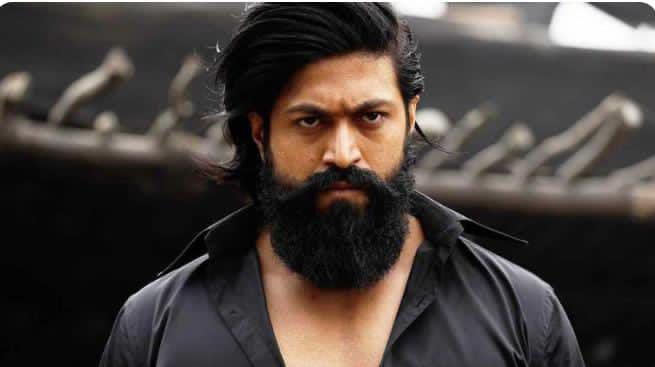
Ranbir Kapoor, one of Hindi cinema’s most recognisable contemporary actors, was linked to the role of Rama. Yash, whose popularity had expanded enormously following the KGF films, was associated with Ravana. Alia Bhatt was reported to be in talks for the role of Sita. As per later clarifications from sources close to the production, Ranbir’s speculation was true, but Alia was never officially offered Sita’s role and by August 2023, reports suggested she had walked out due to date issues.
Himesh Mankad’s report became an important moment in the project’s public journey because it gave the conversation a new direction. The film was no longer being discussed only as an ambitious idea that had faced delays. It was now being discussed through the actors who might finally bring its central characters to the screen. The years of rumours had found a new focal point.
RANBIR KAPOOR AND THE AIRPORT MOMENT
Ranbir Kapoor casually hinting at Ramayana during a fan interaction became a big talk of the town. It brings the film out of the world of trade reports and social media discussions and into a real-life moment. For Ranbir, the role would represent a major departure from many of the characters he has played throughout his career. For the audience, the possibility of seeing him portray Rama created a new level of anticipation.
The conversation was no longer just about whether the film would happen. It was about what the film might become.
2023–2024: FROM CASTING RUMOURS TO THE REALITY OF PRODUCTION
As 2023 progressed, further reports began to outline the expected production schedule. In August 2023, it was reported that Yash had undergone multiple look tests for Ravana.
In October, Himesh Mankad reported that Ranbir Kapoor and Sai Pallavi were expected to begin filming in early 2024, with Yash joining the production later for his portions. The details helped audiences understand how the project was moving forward. Then, in April 2024, reports and photographs from the sets featuring Ranbir and Sai Pallavi brought renewed excitement. The film was visibly moving into production, and the characters who had existed in casting reports were beginning to take shape on screen. The cast also expanded, with actors such as Ravi Dubey associated with Lakshman and Sunny Deol with Hanuman. Arun Govil, remembered by generations of viewers for playing Rama in Ramanand Sagar’s television Ramayan, was cast as Dasharatha.
The casting brought together different generations of Indian screen history. There was the peak stardom of Ranbir Kapoor, the pan-Indian popularity of Yash, Sai Pallavi’s reputation for expressive performances and the nostalgia associated with Arun Govil. The project was no longer simply about finding actors for famous roles. It was about bringing a large ensemble together to inhabit a shared cinematic world.
By this point, the journey that had begun with an announced trilogy in 2017 had undergone years of development, delays and changing expectations. And the project was still evolving.
NOVEMBER 2024: A NEW CHAPTER, A VISION UNFOLDING IN TWO PARTS
On November 5, 2024, Namit Malhotra officially announced Ramayana as a two-part cinematic adaptation, with the first instalment planned for Diwali 2026 and the second for Diwali 2027.
This was a significant change from the three-part format originally proposed in 2017. The announcement marked the arrival of a more clearly defined production identity, with Nitesh Tiwari directing and Ranbir Kapoor, Sai Pallavi and Yash at the centre of the cast. It also represented a new phase in Namit Malhotra’s long-term vision. Rather than presenting the epic as a conventional standalone film, the two-part format offered room to develop its characters and narrative across a larger cinematic journey. The format creates an opportunity, but also a responsibility. Each instalment must deliver a satisfying experience of its own while contributing to the larger story.
The audience must feel that the first film has a meaningful emotional arc, not merely that it is waiting for the second.
For a story as expensive as Ramayana, that balance will be crucial. The change also illustrates how much the project had evolved since the initial announcement. What began as a proposed trilogy had become a two-part cinematic undertaking under a more consolidated production vision. The dream remained the same. Its form had changed.
JULY 2025: THE GLOBAL AMBITION BECOMES CLEAR
On July 3, 2025, Prime Focus Studios unveiled the global title launch of Ramayana titled “Ramayana: The Introduction”, presenting the project as a two-part epic intended for audiences around the world. The announcement emphasised the film’s IMAX ambitions, its international creative collaborations and the involvement of Namit Malhotra’s Prime Focus Studios alongside Yash’s Monster Mind Creations and DNEG. The principal cast included Ranbir Kapoor as Rama, Yash as Ravana, Sai Pallavi as Sita, Sunny Deol as Hanuman and Ravi Dubey as Lakshman. The production also announced a collaboration between Hans Zimmer and A. R. Rahman for the music, bringing together two composers with very different musical backgrounds. This was an important statement of intent. The film was being positioned not simply as another major Hindi release but as a project with international ambitions, built around a story rooted in Indian culture.
Its technical requirements were equally demanding. The world of Ramayana needs to feel vast without losing its emotional intimacy. The palaces, forests, kingdoms and battles must serve the narrative rather than become a collection of disconnected visual spectacles. The global ambition therefore raises a fundamental question: can the film combine international technical expertise with an unmistakably Indian storytelling identity? That is the challenge that makes the project so compelling. The goal should not be to imitate Hollywood. It should be to demonstrate that Indian cinema can bring its own stories to the global stage with confidence, craftsmanship and cultural authenticity.
2026: THE FIRST LOOK THAT SPARKED A NEW CONVERSATION
On July 3, 2025, the makers unveiled the first look of Ranbir Kapoor as Rama, giving audiences an official glimpse of the character after years of casting speculation and production updates. For a project that had spent so much of its public life as a rumour, a report or an expectation, this was a defining moment. The discussion had changed again.
The audience could finally begin to judge the film’s visual approach, Ranbir’s presentation as Rama and the broader creative choices being made by the filmmakers.
The first look also brought the central challenge into sharper focus: how do you portray a character who is not merely a famous figure in Indian storytelling, but an ideal associated with duty, dignity, compassion and moral responsibility? The answer cannot come from appearance alone. The film must establish Rama as a person whose decisions and sacrifices make the audience understand why his story has endured for generations. That is where the performance, screenplay, music and direction will matter most.
As the promotional campaign developed, the film’s public identity became more defined. The makers confirmed Diwali 2026, November 6, 2026, as the worldwide theatrical release date for Ramayana: Part One. After years of uncertainty, the first instalment now has a confirmed date on the calendar. The journey from the original announcement to the release campaign has been long, but it has brought the project to its most important stage yet: the point where audiences can begin to judge the actual film rather than the expectations surrounding it.

Leave a Reply